
Background
Despite recent announcements whereby the U.S. Environmental Protection Agency (EPA) no longer considers CO2 a hazardous gas, the end result from this will be devastating to the environment, our economy, and our lives. There still remains a greater push to use to use CO2 in more innovative industrial applications such as tomorrow’s plastics — thus replacing hydrocarbons. The environmental harm from unmitigated climate change will not be missed, despite disappearing regulatory oversight on the part of the U.S. Here and abroad, many efforts are underway to help reduce carbon emissions and help our planet. The opportunities to harness CO2 emissions remain.
The CO₂ industry expands organically, I’d say about 3% annually, in some markets. The best way to grow more rapidly in the industry is via the development and implementation of new and unique applications in a wide variety of markets. CO₂ applications, of a traditional nature, are tried and true, such as the many uses in food processing, beverage carbonation, and a range of industrial uses (e.g., welding, water treatment, lasers, and medical applications). On the other hand, new and “green” CO₂ applications will help sustain the industry — most of which are of an industrial nature. Established food and beverage applications typically account for 70% of all tonnage consumed in the merchant sector. There are also the demands of a captive and sequestration nature, which in my view, are generally categorized outside of the merchant markets, such as large EOR (enhanced oil recovery) usage. There are many conceptual ideas for the application of CO₂ in industry, many of which have a green take, a form of sequestering CO₂ molecules in everyday products. There are other applications which are relatively new to the industry and are being applied and expanded in the markets, such as concrete dosing, which I will describe in further detail.
In the interest of reversing climate change and cleaning up the environment, more applications are being developed all the time, many of which have been initially developed in academia and have not been scaled up or commercialized. Some of the technologies outlined in this article will have to rely on subsidies in order to make them economically viable, at least for the short term. Of the many technologies which claim to produce fuels, chemicals, and plastics, or recover flue gases cheaply, the longer-term, viable commercial results will speak for themselves. The newest ones will eventually be commercialized and make their place in the CO₂ and sequestration industries, while others will not.
The applications
There have been a number of emerging technologies which rely on CO₂ in the production of various plastic and building materials, some of which could replace hydrocarbons in plastics, which is a truly green usage. To go further on this subject, the ultimate goal of successfully using CO₂ from flue gas to produce useful products — along with sequestration — would represent a double achievement . The problem has always been the very high cost of recovery, and then creating a viable CO₂ product that will meet required standards and specifications.
Some (or all) of the concepts below could eventually yield true breakthroughs when scaled up:
- Carbon nanotubes and fibers, via molten electrolysis. Such materials are used in carbon composites, which are lightweight alternatives to metal, used in a variety of products such as bicycles, one of which I have — it is very light and rigid. Other products might be airplanes, boat hulls, and turbine wind blades. The applications are endless. Ideally, sources for the raw CO₂ could be flue gas from a power plant, or other such stream, like a cement kiln.
- Concrete dosing with sequestered CO₂ helps strengthen the concrete by increasing the calcium carbonate content. This relatively new application is now being used industrially and is gaining in acceptance.
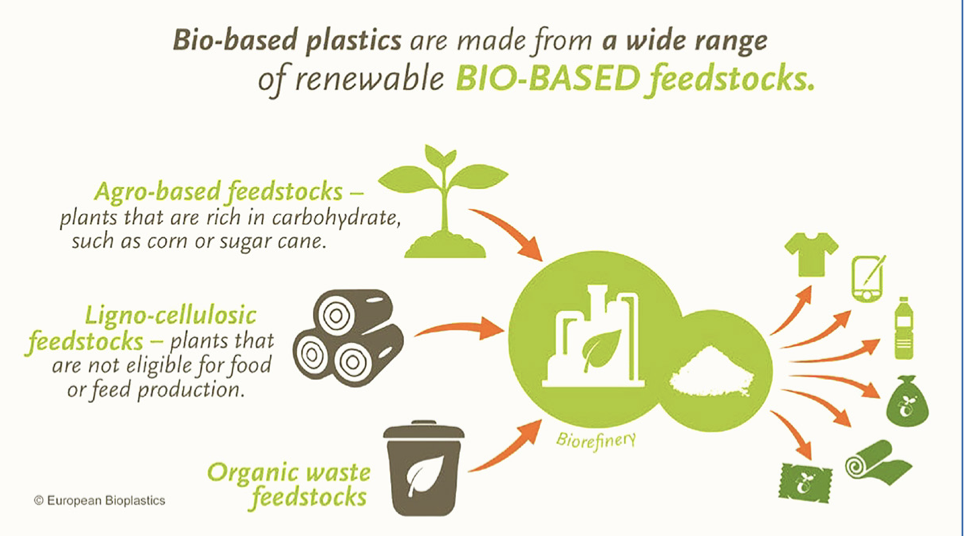
- Bioplastics begin as nanoparticles for use in next-generation plastics and building materials such as coatings and concrete. In some cases, bioplastics — made from renewable biomass (e.g., sawdust, rice hulls, etc.) and/or are biodegradable — have been developed in universities and then spun out for commercialization. As an example, one such startup combines CO₂ with by-product waste materials from coal and coke combustion using fly ash. Another uses flue gas as a CO2 feedstock while microbes, along with hydrogen and oxygen, yield the desired biopolymer.
- Organic chemicals. Methanol, a solvent that has long been produced by industrial distillation, is now being artificially photosynthesized cleanly using a copper-based catalyst, captured CO₂ , and hydrogen. The developing technologies for biomass-based ethylene glycol production also depend on recovered CO₂ in its green process.
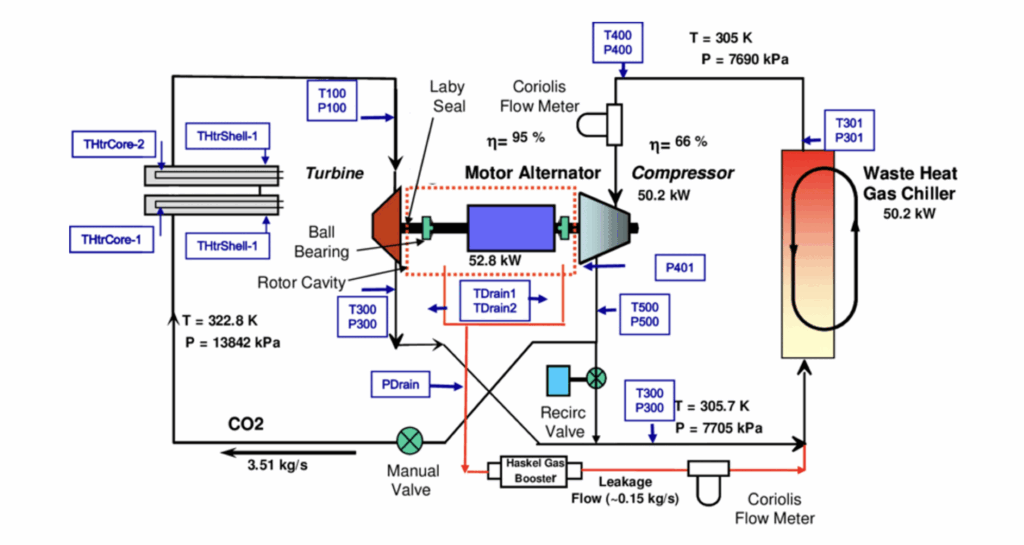
- Enhanced geothermal systems (EGS), using CO₂ as a working fluid. Supercritical CO₂ could be utilized in these systems as a circulating heat exchange fluid. Using the density difference between cold CO₂ flowing down the injection wells and the hot CO₂ traveling up these wells would eliminate the need for a circulating pump. Further, CO2 could be used as a working fluid in supercritical power cycles. This application works well with compact turbo machinery.
- Polymers, where CO₂ could be used as a feedstock via transformation of CO₂ into polycarbonates, polyesters, etc., using proprietary zinc catalysts.
- Industrial fuels, created through the transformation of CO₂ from power plant flue gas, are under development. Renewable electricity is used to reduce CO₂ to CO, a key product used in various industrial processes. The CO₂ is fed into catalytic reactors which chemically transform CO₂ into fuels and chemicals, emitting only oxygen.
- Cold liquids. Almost nobody is excited about the extra environmental burdens our planet is experiencing with the exponential expansion of data centers, both in the U.S. and abroad. Heat, power, and water resources will be stretched to meet demands. The potential for CO₂ as a cooling agent is possible within the data centers, as would be other cold liquids. Even more important would be the potential, and proven technology, of utilizing “supercritical CO₂” (sCO2). At a specific temperature, sCO2 behaves like a gas but has the density of a liquid. It is used to replace cooling water completely — and is more efficient in turning turbines for the generation of power. Both are big wins, and something special in an era where preserving resources are critical.
CO₂ Sources – Traditional and what is being developed and could be available
Developed and could be available
In the U.S., the Summit Energy CO₂ pipeline has not been given up on yet. Considered to be one of the largest carbon capture projects on the planet, it is slated to receive CO₂ from about 50 ethanol plants in the Midwest and piped to a location in North Dakota (about 2,000 miles away) for sequestration. There have been complaints by landowners and local government officials who simply do not want this pipeline under their land. If it does not become a reality, many ethanol plants will either continue to vent their CO₂ byproduct stream into the atmosphere or try to monetize via the markets or sequestration-based credits.
With the exception of the above-mentioned CO₂ sources — which are excellent for the merchant trade — what remains as newly available sources in the U.S. have largely been limited to biogas sources. Numerous such projects are working with various destinations for their product. However, these sources are usually smaller in size versus most ethanol sources (50MM or 100MM GPY) in ethanol production capacity — this can represent from 400–1,000 TPD of CO₂ (in the ethanol by-product world) versus 50–200 TPD of available CO₂ (in the biogas world).
The problem for CO₂ sourcing is their locations. Most of the available ethanol plants are in the heart of the Midwest, which is essentially supersaturated with such plants, whereas biogas sources appear in places where CO2 streams are more strategically located. The cost of freight to customers and depots is expensive, sometimesexceeding the cost of a viable liquid product. So, in the end, being local, or at least closer to a production site is the most sought after scenario of the gas companies and consumers.
Summary
The ultimate challenge in CO₂ utilization is to move industrial applications from the lab to successful pilot projects in the field, and then scaled up to make them economically feasible. As with all other developments, industries, and processes, such applications need to be competitive as standalone, scaled-up technologies or subsidized until profitability has been attained.
I often think of the most current, proven technologies which have been used successfully, albeit expensively, to recover CO₂ from flue gas. The agent of choice over the years has been MEA (monoethanolamine) or a similar amine solvent. In the front end of most commercialized plants, such as those that were once run by U.S. companies like the AES Corporation, operated flue gas recovery operations from coal-fired cogeneration facilities for decades. They were developed under now defunct energy laws which used the cogenerated steam as a thermal host in the MEA process. This subsidy essentially included the capital cost of the expensive CO₂ recovery plant in the cost of the power plant, thus considering the cost of CO₂ production to only be that of utilities, labor, and maintenance. With today’s 45Q/IRA tax credits, a significant number of companies are looking to recover CO₂ more cheaply and/or apply the CO₂ in useful products. This is a form of subsidy that would provide a performance-based tax credit to power plants and industrial facilities capturing and storing CO₂ that otherwise would have been emitted to the atmosphere. The credit is linked to the installation and use of CO₂ recovery equipment on industrial sources, such as gas or coal power plants, or facilities directly removing CO₂ from the atmosphere. The recovered CO₂ is then applied in producing construction materials, biofuels, EOR, and sequestration via class VI wells, for example.
The value of the credit depends upon the type of CO₂ storage resulting from the process. Eligibility for industrial facilities begins with 100,000 metric TPY, including ethanol and fertilizer production. The value of the credits range from $85 to $180/metric ton, depending upon destination, permanent storage, or utilization; and the term of such credits would be 12 years, where projects must begin by 2032. Of course, there is much more than EOR, as related to technologies and products these developers hope to commercialize, such as fuels, plastics, chemicals for industry, and algae, for example.
There are many takes on technology and the desired products that can be produced should the technologies actually be scaled up successfully. Often, initial cost estimates to achieve such ends fall short. Possible subsidies, such as 45Q/IRA, could be a means of making such advances work, at least for a period of time, until additional advances occur or improvements in such technologies take place. Long term, I believe some of these technologies will be scaled up successfully. The earth is our home, and there is no replacement. Therefore, a reduction in carbon emissions is key, through the sequestration of CO₂ , to producing useful products for everyday life.
About the author
Sam A. Rushing is the president of Advanced Cryogenics, Ltd., and a chemist with massive consulting and merchant CO₂ industry experience. The company focuses on CO₂ -based consulting work, cryogenic gas proficiency, and providing equipment to the industry. When you have the need for CO₂ subject matter expertise, please contact Sam.
Phone: 305-852-2597; Email: [email protected]; Website: www.co2consultant.com
Source: Advanced Cryogenics, Ltd., original text, 2026-05-26.